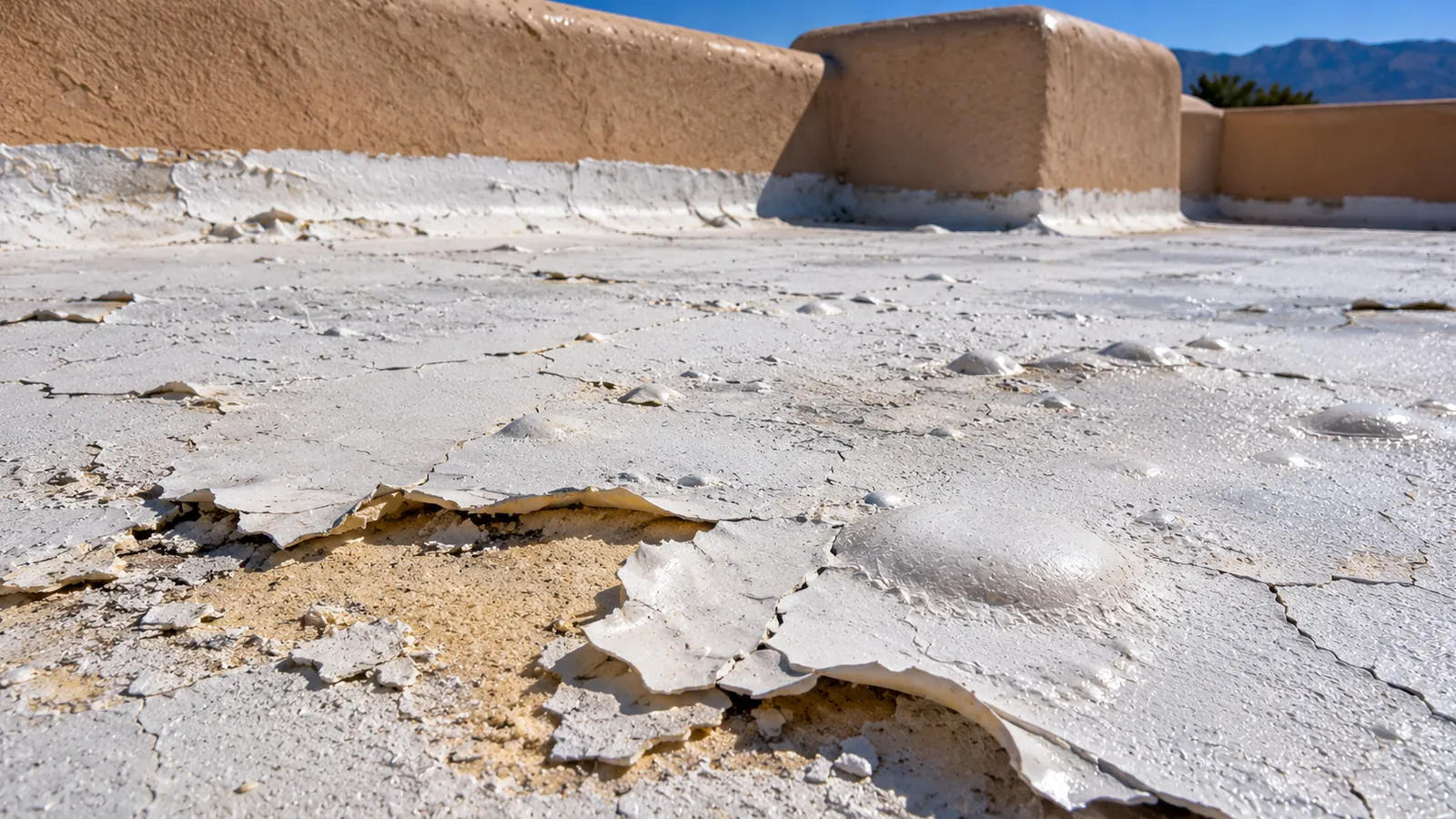
1. It's gone gray or chalky
A fresh coat is bright white. As UV breaks the surface down it turns gray and leaves a chalky residue on your hand. That's the first sign of thinning.
2. Fine cracks or "crazing"
A web of small surface cracks means the coating is aging and losing flexibility. Water can start working in.
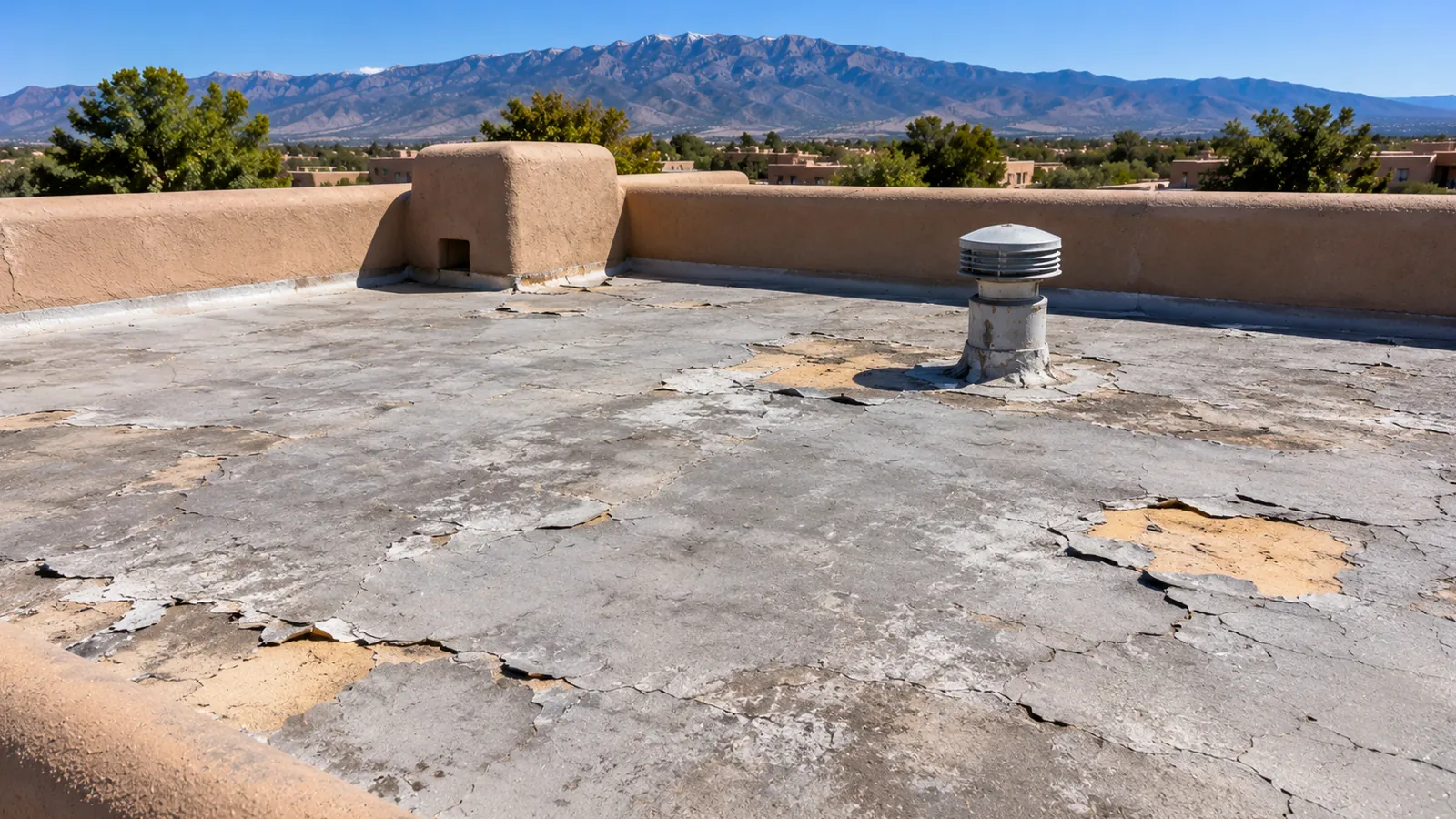
3. Tan or brown foam showing
Once foam is exposed, UV starts eroding it immediately. This is the "recoat now" sign.
4. Blisters and bubbles
Blisters usually mean the coating has lost its bond — from moisture, poor prep or heat. They pop, peel and expose foam.
5. Peeling sheets
Large peeling areas mean the coating has let go. It has to be removed before recoating, or the new coat peels with it. See prep and repairs.
6. Worn paths and bare spots
Look around the swamp cooler, AC, roof hatch and any path people walk. These wear first and often leak first.
7. Ponding stains or new leaks
Dark rings where water sits, or new ceiling stains after storms, mean water is getting where it shouldn't. See leak repair.
What to do
| What you see | Usual next step |
|---|---|
| Gray, chalky, fine cracks | Plan a recoat in the next year or two |
| Foam showing in spots | Repair those spots and recoat soon |
| Blisters and peeling | Remove failed coating, prep and recoat |
| Soft, wet foam | Cut out and re-foam, then recoat |
| Foam eroded everywhere | Consider a re-foam — see recoat or replace? |
Call (505) 886-8732 for a free look.
Common questions
Is it safe to walk on my flat roof?
Foam roofs are walkable with care, but parapets and edges are a fall risk. If you're unsure, have it inspected.
Can I just patch the bad spots?
If the rest of the coating is healthy, yes. If it's worn everywhere, patches won't last long.