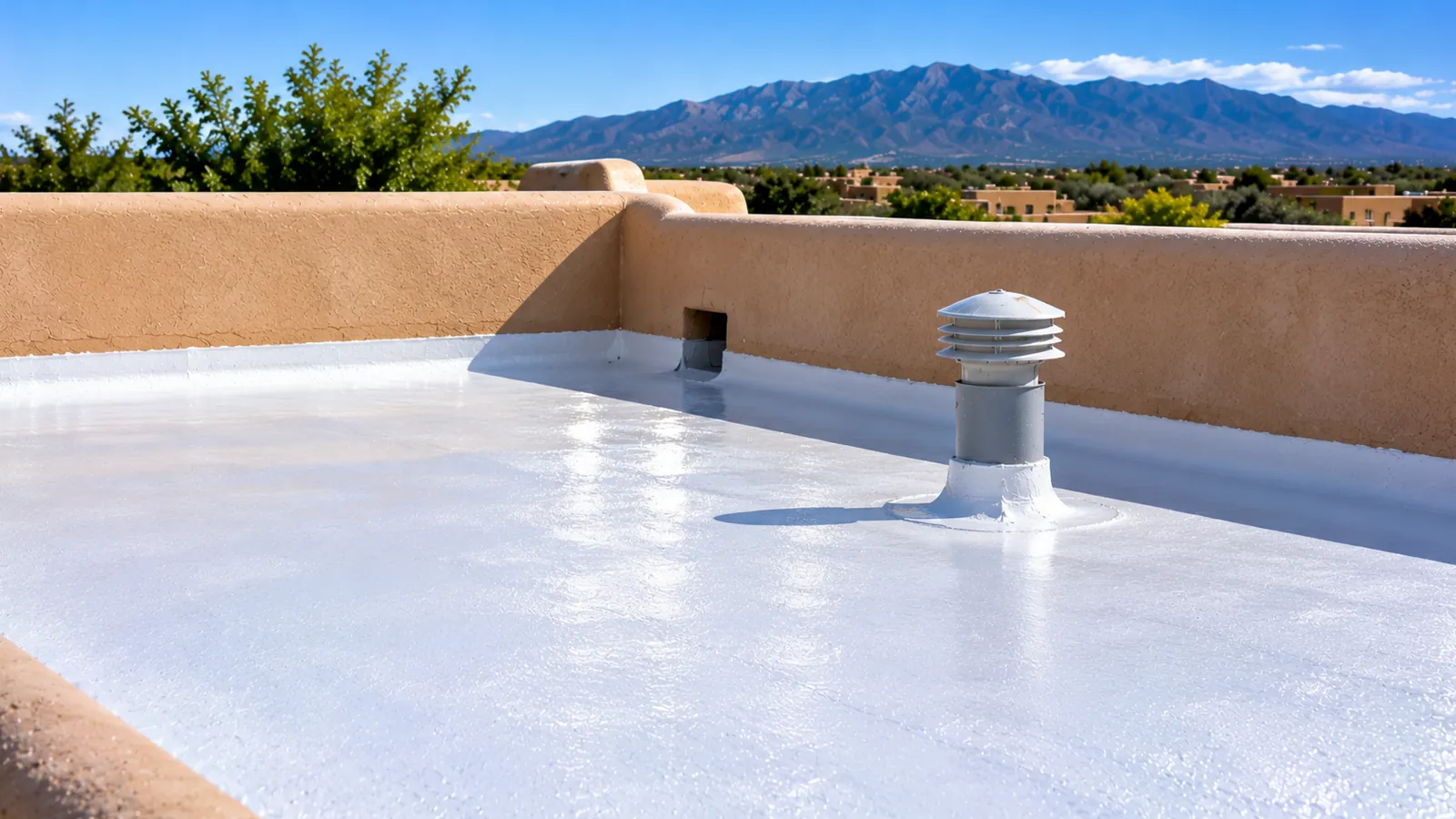
Side by side
| Acrylic elastomeric | Silicone | |
|---|---|---|
| Best for | Roofs that drain well | Roofs with ponding spots |
| UV resistance | Very good | Excellent |
| Standing water | Weak point | Strong point |
| Stays white | Well | Collects dust sooner |
| Cost | Lower | Higher |
| Future recoats | Flexible | Silicone only |
| Application | Spray or roll, usually two coats | Spray or roll, often one heavy coat |
Choose acrylic when…
- Your roof drains within about a day after rain
- You want the best value per year
- Keeping the roof bright white matters to you
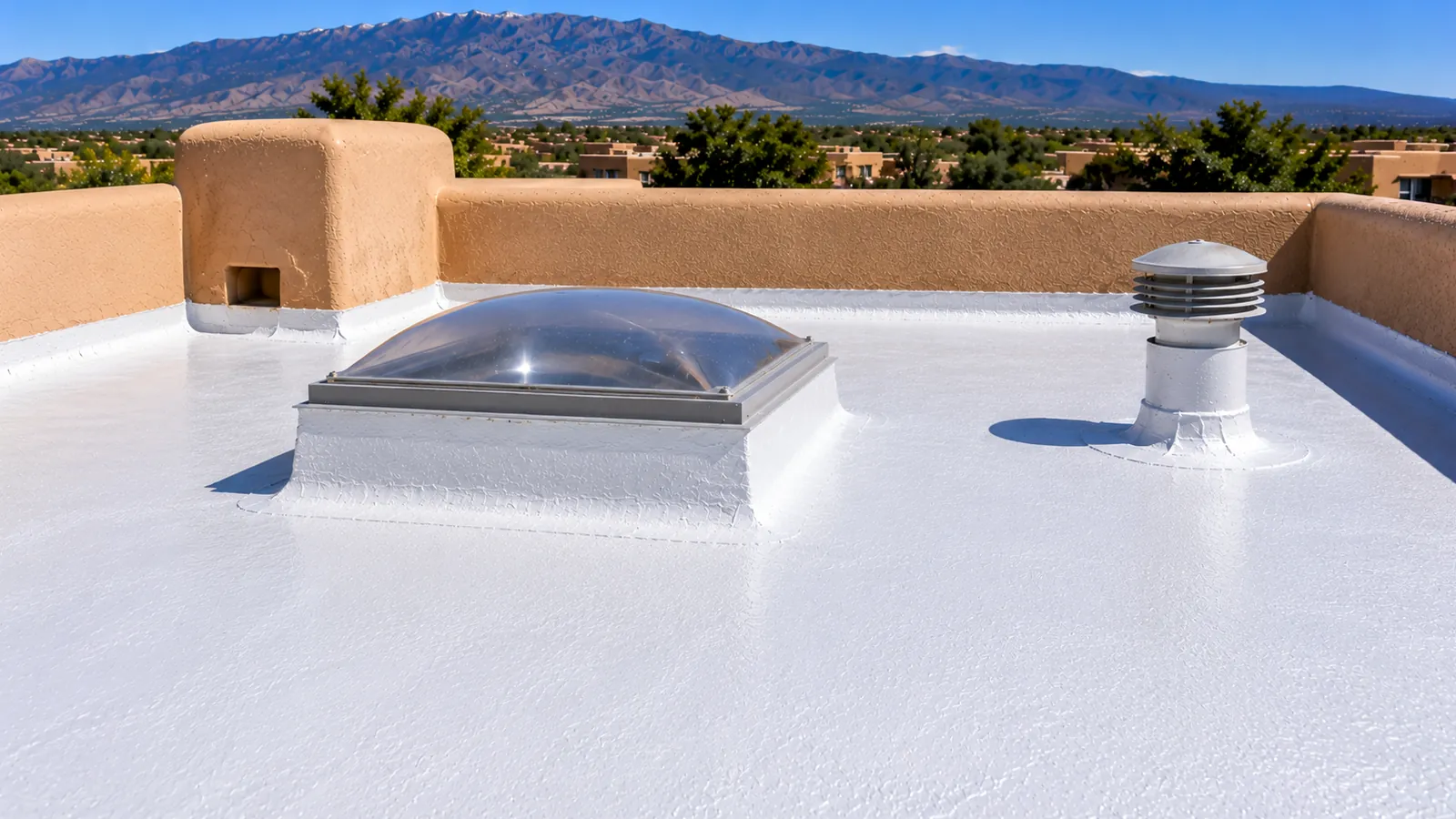
Choose silicone when…
- Water stands in several places for more than a day or two
- Low spots can't practically be built up
- You want maximum UV life and accept the higher cost
The third option: fix the drainage
Often the smartest choice is to build up the low spots with foam, fix the canales, then use acrylic. That solves the problem instead of coating around it. See flat roof leak repair.
Albuquerque-specific notes
- Dust: in windy, dusty seasons silicone roofs can look gray sooner, slightly reducing reflectivity.
- Monsoon: roofs that pond after July and August storms are the main silicone candidates.
- Commitment: once you use silicone, future recoats will also be silicone.
Product pages: elastomeric · silicone
Call (505) 886-8732 and we'll price both for your roof.
Common questions
Can you mix them — silicone in low spots, acrylic elsewhere?
Sometimes, with the right products and detailing. We'll tell you if it suits your roof.
Which lasts longer?
On ponding roofs, silicone usually does. On well-drained roofs, a thick acrylic coat performs very well.
Is one better for hail?
Neither is hail-proof. Foam thickness and coating thickness matter more.