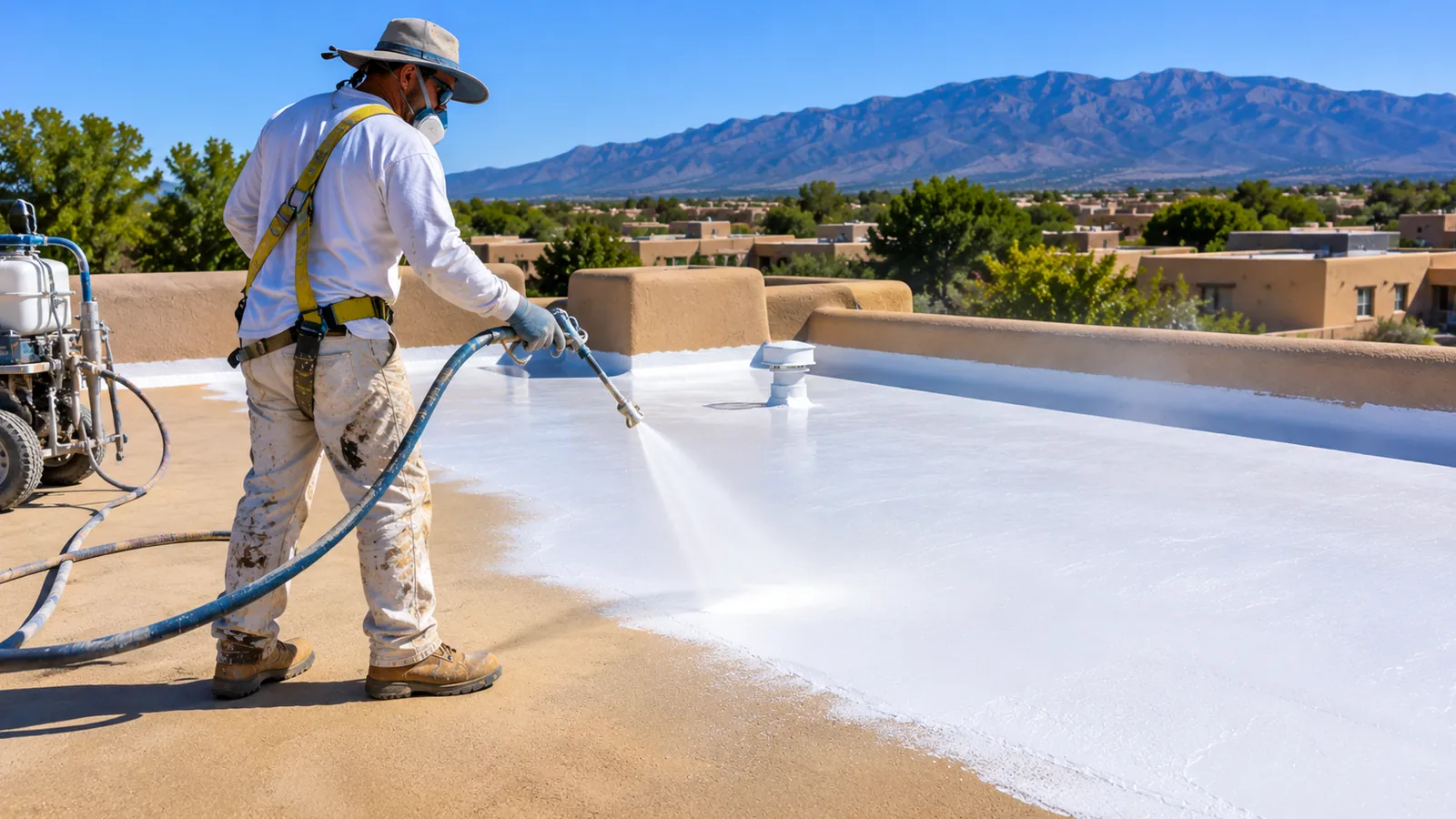
How a foam roof works
Two liquids are sprayed together and expand into a rigid, closed-cell foam that bonds to the roof below. It forms one seamless layer with no seams to split, builds up around parapets into a smooth cant, and can be sprayed thicker in low spots to improve drainage. Then a coating goes on top to protect it from the sun. It's the most common roof on Albuquerque's flat and pueblo-style homes for good reason.
When a re-foam makes sense
- The coating has been gone for years and the foam is weathered or eroded
- The roof has many low spots that pond after storms
- An old built-up or rolled roof needs replacing but is still dry and sound underneath
- You want more insulation on top of the house
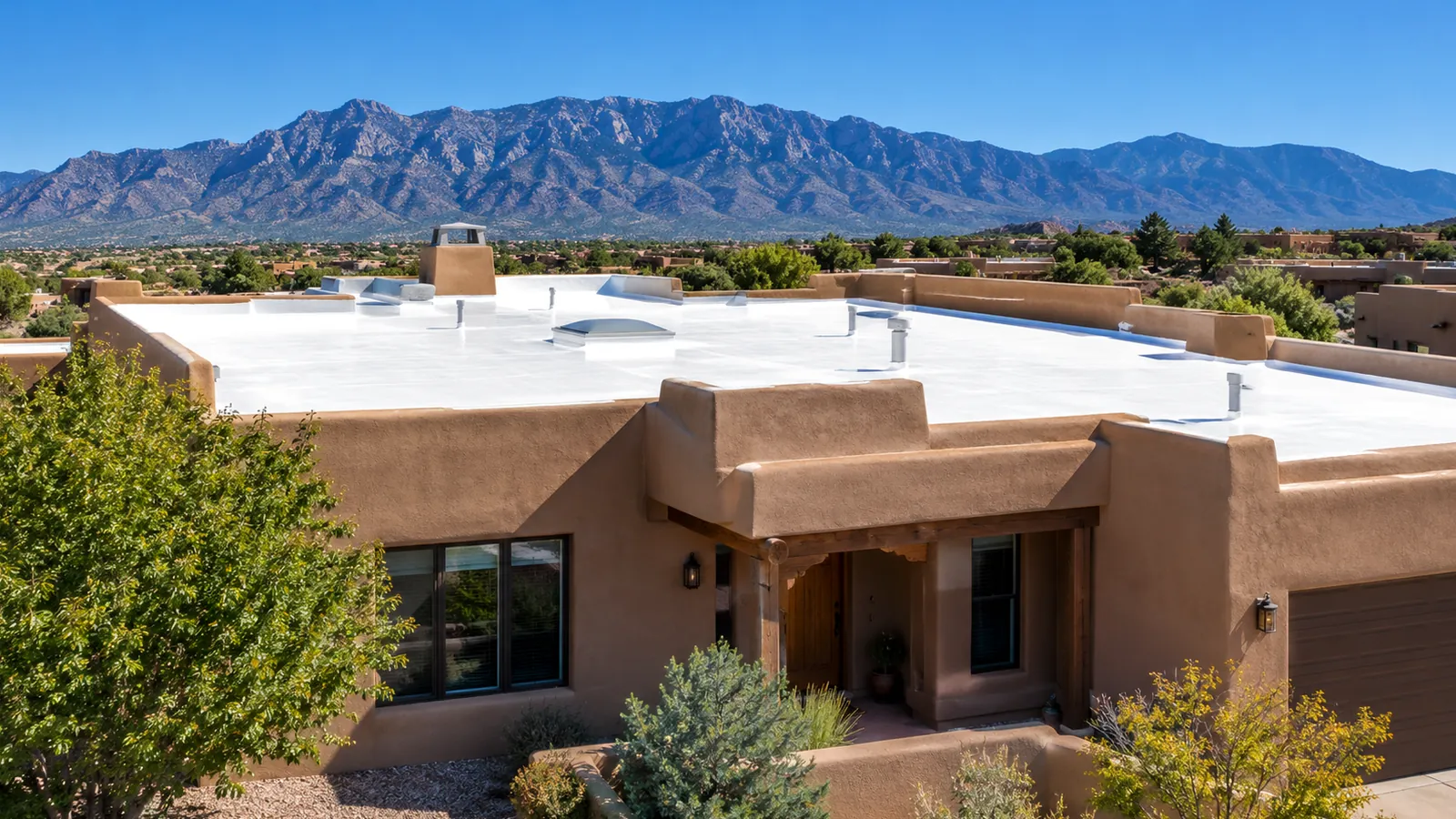
The process
- Check moisture — wet insulation or decking has to come out; foam can't go over a wet roof.
- Prepare — remove loose material, clean, mask walls and windows, protect cars and plants.
- Spray foam — to the specified thickness, with extra to build slope toward the canales.
- Detail — foam up the parapets and around curbs and pipes.
- Coat — the same day or soon after, so UV never reaches bare foam.
Wind and overspray
Albuquerque's spring wind is the enemy of spray work. Foam and coating mist can drift onto cars, windows and neighbors' property. We schedule spray days around the wind forecast, mask carefully and switch to rollers near sensitive areas.
Cost and lifespan
A new foam roof with coating commonly runs about $5–$9 per square foot. With recoats every several years, foam roofs often last for decades. Compare options in recoat or replace?
Call (505) 886-8732 for a free moisture check and estimate.
Common questions
Does foam add insulation?
Yes. Each inch of foam adds insulation on top of the house, which helps in both summer and winter.
Can foam go over my old roof?
Often, if the old roof is dry and well attached. Wet areas have to be removed first.
How long does it take?
Many homes take a day or two of spraying plus coating, weather permitting.