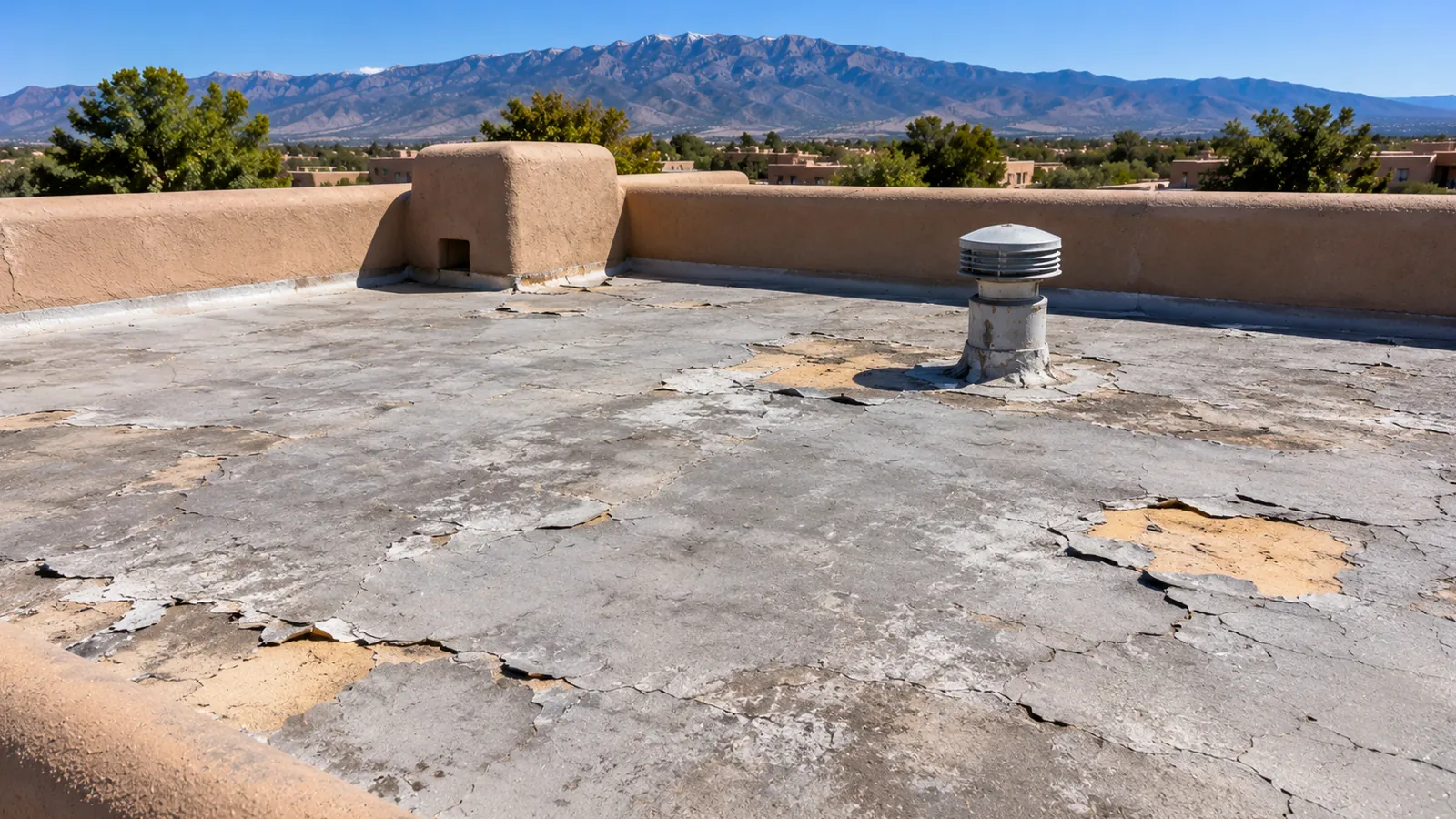
Roofs we see under the dirt
Modified bitumen
Asphalt-based sheets, often with a granule surface, common on 1980s–2000s homes.
Rolled roofing
Lighter mineral-surfaced rolls, often on additions, porches and garages.
Built-up (tar and gravel)
Layers of felt and asphalt with gravel on top, on many older homes and casitas.
Old coatings
Aluminum or silver coatings from decades ago.
When a coating is a good idea
- The roof is still dry underneath and well attached
- Seams are mostly sound, with only local repairs needed
- The surface is worn, cracked or losing granules from sun
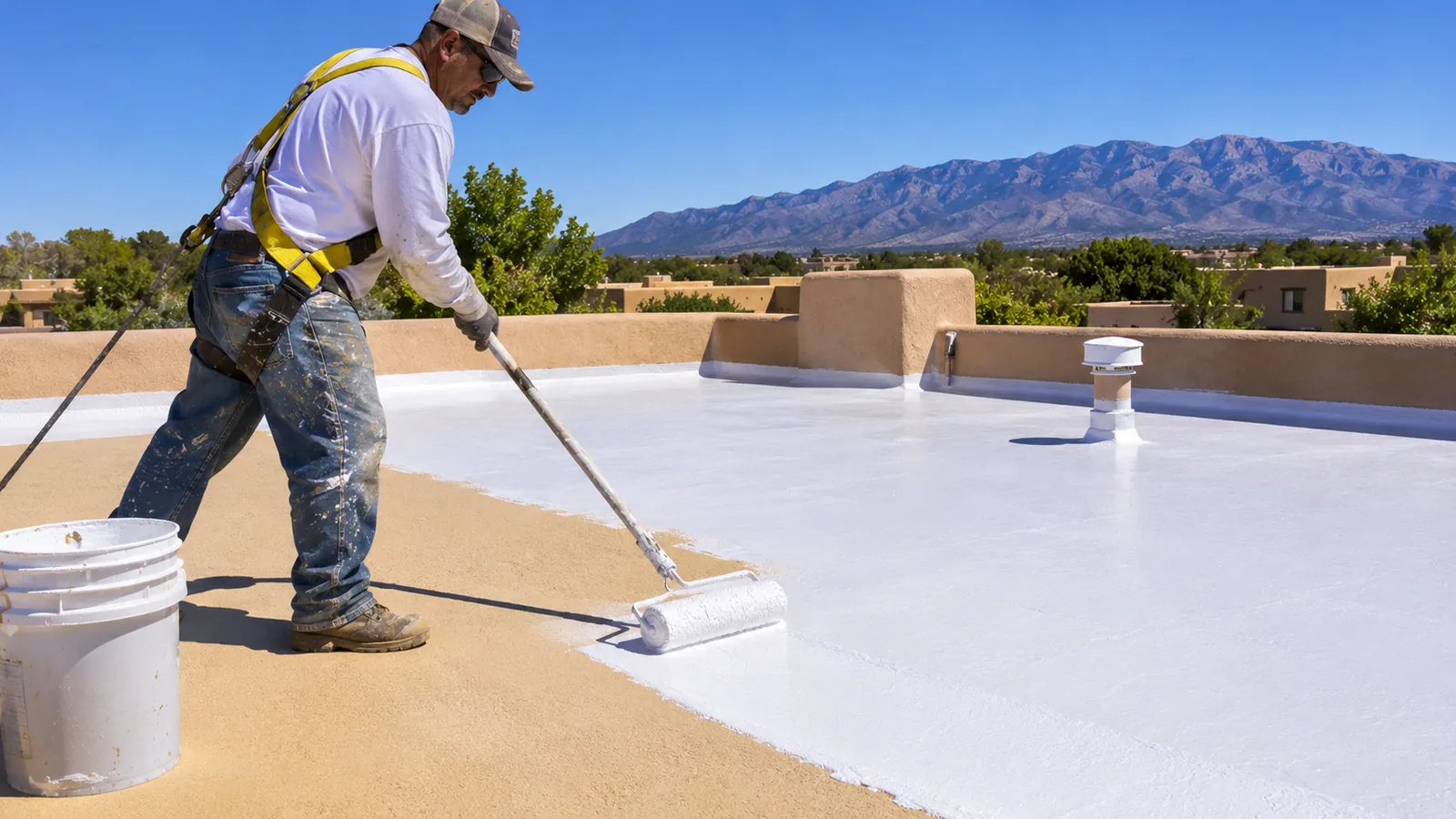
- You want to add years and reflect heat without a tear-off
When it isn't
- Wet insulation or soft decking — coating traps the water
- Widespread blisters, open seams and shrinkage
- Already several layers deep
In those cases, a new foam roof or full replacement is the better value. See recoat or replace?
Prep for older roofs
Gravel and loose granules come off, blisters are cut and patched, seams are reinforced with fabric, and the right primer goes on so the coating bonds to asphalt-based surfaces without bleeding. Then the coating goes on in full thickness.
Not sure what's under your roof's dust? Call (505) 886-8732 and we'll find out.
Common questions
Why do asphalt roofs need special primer?
Asphalt can bleed through and stain white coatings. A stain-blocking primer prevents that and helps adhesion.
Can you coat a tar and gravel roof?
Sometimes, after the gravel is removed and the surface repaired. Many owners choose a foam system instead.
How much life does a coating add?
Often several years or more on a sound roof, with the option to recoat again later.