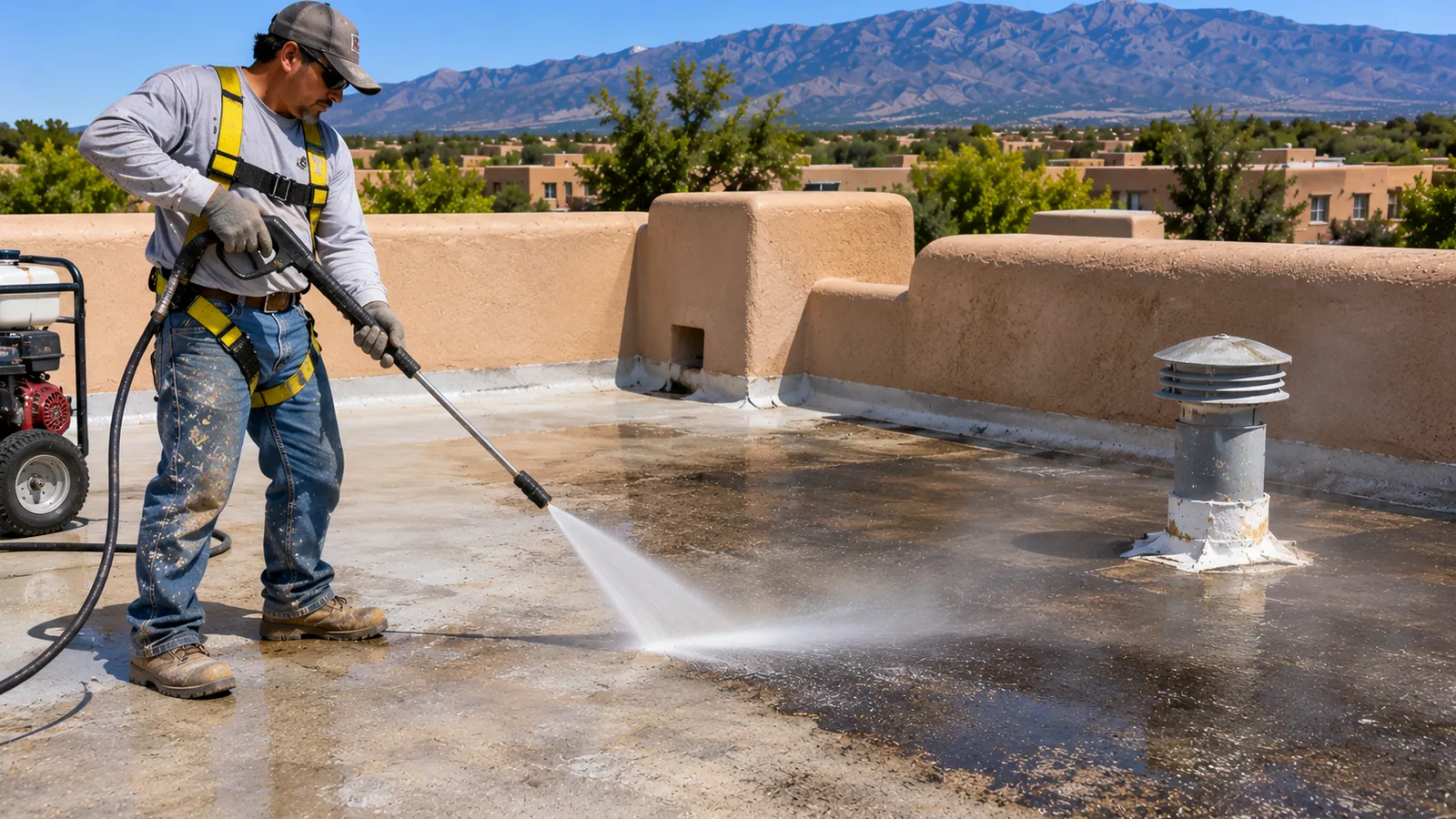
Why prep matters so much
A coating is only as good as what it's stuck to. Paint a dusty, chalky or damp roof and the new coat will blister or peel within a couple of seasons — the kind of failure in our photo of blistered coating. Good prep takes longer than the coating itself, and it's where a bargain bid usually saves its money.
What good prep includes
- Pressure wash the entire roof to remove dust, chalky old coating and debris.
- Let it dry completely — foam holds water after washing or rain.
- Remove blistered and peeling coating down to a sound surface.
- Repair foam — cut out soft, wet or bird-damaged areas and re-foam them.
- Fix low spots where water ponds, if practical.
- Prime surfaces that need it for adhesion.
- Detail vents, skylights, cooler stands and corners with sealant or fabric.
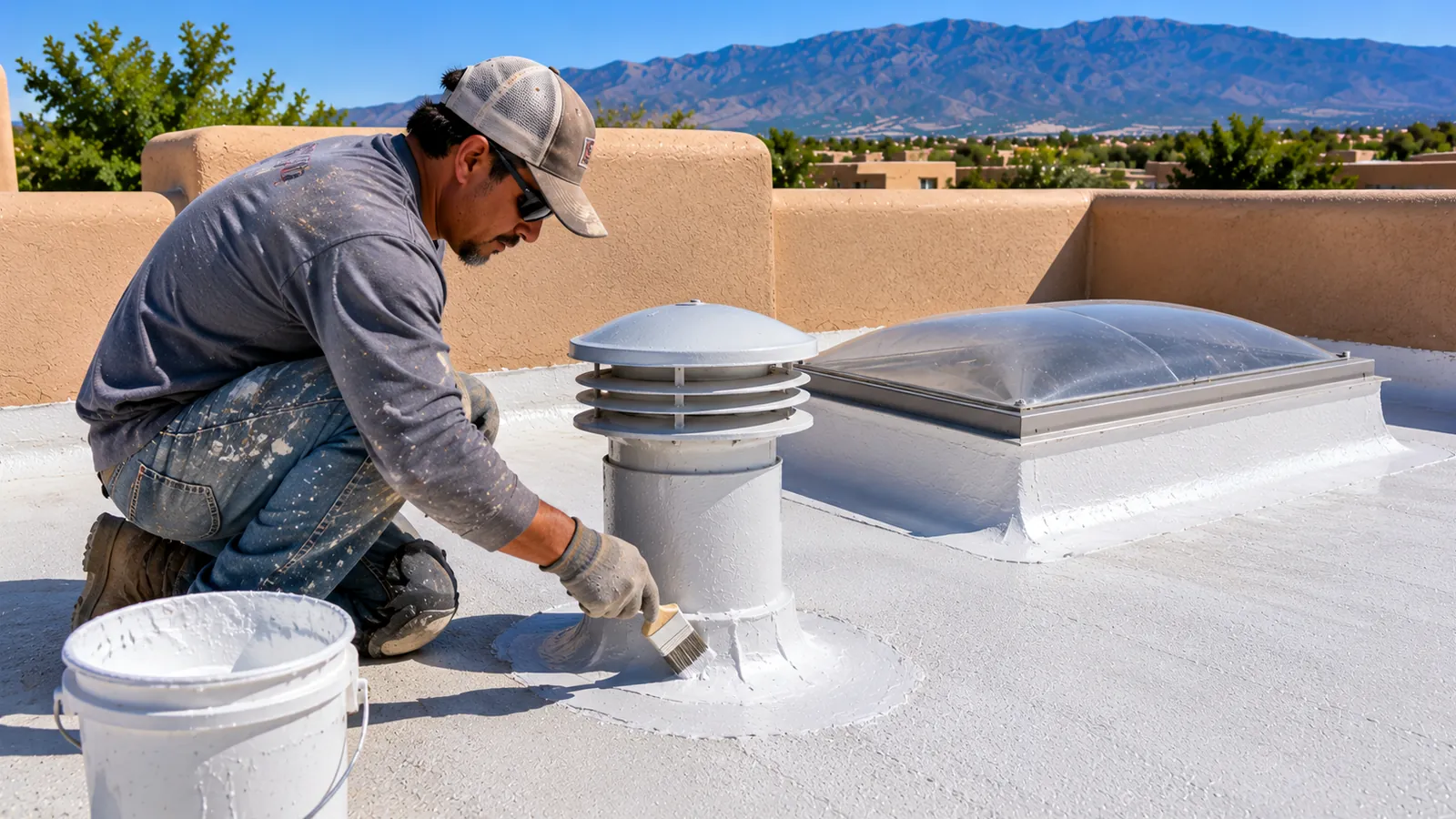
Common foam damage we repair
UV erosion
Bare foam turns dark and powdery, losing thickness every season.
Bird pecking
Birds dig into exposed foam, leaving holes that hold water.
Foot traffic
Paths to swamp coolers and HVAC wear through the coating.
Hail
Hail can fracture the coating and dent the foam surface.
Ask about prep in every bid
When comparing coating estimates, ask how the roof will be cleaned, how wet foam is handled, whether primer is included and what thickness the coating goes on at. See questions to ask before you sign.
Call (505) 886-8732 for an estimate that spells out the prep.
Common questions
Can you just coat over the old coating?
Often yes, once it's clean and any loose or blistered coating is removed. Coating over failing layers makes the new coat fail with them.
How long does the roof need to dry?
It depends on weather; usually at least a day after washing in warm, dry conditions.
Does a swamp cooler cause problems?
Drips and foot traffic around coolers are common trouble spots. We reinforce those areas.